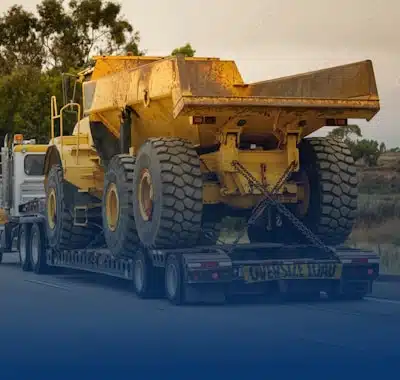
Heavy haul load securement is the process of controlling equipment so it cannot shift, roll, bounce, slide, or suffer avoidable damage during transport. A machine may be heavy enough to feel immovable, but weight alone does not secure cargo. Braking, turning, vibration, road crown, ramps, weather, and rough pavement all place force into the load once the trailer begins moving.
That is why securement is not just a legal task. It is a damage-prevention system. It protects the driver, the public, the equipment, the trailer, and the customer’s project schedule at the same time. When securement is planned correctly, the load rides quietly, the equipment stays protected, and the delivery feels controlled from pickup to final handoff.
Why heavy haul securement starts before chains or straps are attached
Securement begins with understanding the cargo. A bulldozer, excavator, generator, wheel loader, tank, and industrial machine all need different restraint logic because each one carries weight differently. Some loads sit on tracks. Some ride on tires. Some rest on base frames. Some include buckets, booms, forks, blades, or other parts that can move if they are not locked or lowered correctly.
That means the first securement decision is not “how many chains?” The first decision is “what can move, where can force be applied, and what must be protected?”
Once those questions are answered, securement becomes a planned process instead of a rushed loading-yard habit.
How heavy equipment is secured for transport
Heavy equipment is secured by matching restraint points, tie-down force, load direction, and trailer structure to the machine being moved. The goal is to prevent forward movement during braking, rearward movement during acceleration, side movement during turns, and vertical movement from vibration or road shock.
This process depends on correct tie-down placement, rated securement gear, stable machine positioning, and proper control of attachments. A deeper breakdown of how machines are restrained belongs in how heavy equipment is secured for transport, where the full securement process can be explained step by step.
Tie-down points decide whether securement force goes where it should
A tie-down is only useful when it applies force through a point that can handle that force. Some machines include designated tie-down locations for that reason. These points are designed to receive restraint loads without bending weak components, damaging steps, stressing guards, or pulling against parts that were never meant to hold transport force.
This is why tie-down points matter in heavy haul transport. The chain or strap may be strong, but if it is attached to the wrong part of the machine, the securement system can damage the equipment or lose effectiveness when the road begins adding force.
Load shifting is prevented by controlling movement in every direction
Load shifting rarely begins dramatically. It often begins with tiny movement: a machine settles into the deck, a chain loses tension, an attachment vibrates, or a tire compresses under load. Over miles, that small movement can become slack, rubbing, imbalance, or visible shift.
A safer plan anticipates movement before it starts. It controls the load forward, backward, sideways, and vertically, then uses early re-checks to confirm the equipment stayed seated after the first road miles. That is why preventing load shifting during oversized transport deserves its own focused guide.
The most common securement mistakes are usually simple, not mysterious
Many securement problems come from ordinary mistakes made under time pressure. A crew may use a poor attachment point. A bucket may not be lowered fully. A machine may be placed slightly off balance. A chain may rub against an edge. A tie-down angle may look acceptable but provide weak restraint in the direction that matters.
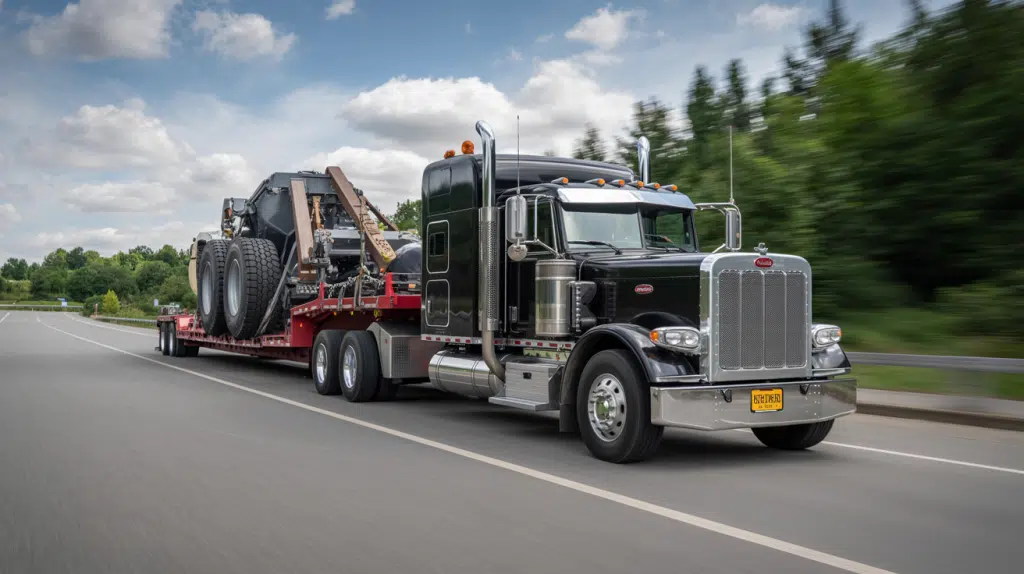
These issues are preventable when crews slow down long enough to check the entire system. A practical review of common load securement mistakes in heavy equipment hauling helps turn small errors into avoidable checks before the trailer leaves.
Pre-transport inspections prevent damage before it starts
Inspection is one of the strongest damage-prevention tools in heavy haul. It confirms the machine is ready to travel, the trailer is ready to carry it, and the securement system is ready to hold it. Without inspection, hidden problems travel with the load.
A pre-transport inspection usually checks machine condition, loose parts, attachment position, tire or track condition, leaks, loading surfaces, securement gear, edge protection, and access around the trailer. These checks are practical, but they are also protective. They catch small issues while they are still cheap, calm, and easy to fix.
That is why pre-transport inspections help prevent equipment damage long before the road creates stress.
Attachment position can change the entire securement plan
Attachments are often the part of the machine that creates avoidable risk. A bucket, blade, boom, fork, grapple, ripper, or auger may change height, width, balance, and movement potential. If that attachment is left in the wrong travel position, the machine may become harder to secure and easier to damage.
Good securement planning treats attachments as part of the cargo, not as harmless extras. The machine body may be stable, but a poorly positioned attachment can still create clearance problems, shifting risk, or contact damage. For that reason, attachment position affects load securement more than many customers expect.
Damage prevention includes paint, tracks, tires, and frames
A successful heavy haul move is not only one where the equipment stays on the trailer. It is one where the equipment arrives without avoidable damage. Paint can be scratched by chains or rubbing points. Tracks can be stressed by poor loading angles. Tires can be affected by pressure, positioning, or edge contact. Frames can absorb stress when support points are wrong.
This is where securement becomes more careful and more human. The equipment may be built for hard work, but it still represents a valuable machine that somebody needs back in working condition. A focused page on protecting paint, tracks, tires, and frames during transport can explain how practical handling choices reduce these avoidable risks.
Vibration and road shock must be controlled across the whole trip
A load that looks secure in the yard can behave differently after hours of vibration. Road joints, rough pavement, braking events, grades, and turns all introduce repeated force. Over time, these forces can loosen gear, shift contact points, rub protective surfaces, or expose poor load placement.
That is why securement is not finished at pickup. It continues through re-checks, stop routines, and careful attention to how the load is riding. The deeper transport effects of vibration and road shock on heavy equipment in transit show why long-distance hauling needs more than a one-time inspection.
The delivery inspection completes the securement process
Damage prevention does not end when the trailer stops. Customers should inspect the machine after delivery because transport can reveal marks, movement, loose accessories, or signs of stress that should be documented quickly. This is not about blame. It is about confirming that the equipment arrived ready to work.
A good post-delivery check looks at obvious damage, attachment condition, tire or track condition, frame contact points, paint rubs, leaks, and whether the machine unloads normally. That is why customer inspection after heavy equipment delivery is an important final step in the securement and damage-prevention process.
A practical securement mindset for heavy haul projects
The safest securement plans usually follow a calm order:
- understand the machine and its movement points
- place the load where the trailer can carry it correctly
- use proper tie-down points and rated securement gear
- lower, lock, or secure accessories before movement
- protect contact points from rubbing or edge damage
- re-check the load after it settles into travel
- inspect the machine again after delivery
This order keeps the process grounded. It also helps customers understand that securement is not just chains and binders. It is a complete system for controlling equipment and preventing damage.
Why securement quality builds customer trust
Customers may not see every planning decision behind a move, but they can feel the difference when a load arrives cleanly. Equipment that arrives without new damage, without loose attachments, and without unexplained marks creates confidence. That confidence matters because heavy equipment is expensive, project schedules are tight, and downtime can be costly.
In that sense, securement is also a service signal. It shows that the carrier is not just trying to move the machine, but to protect the customer’s investment.
Conclusion
Heavy haul load securement and damage prevention work together. Securement controls movement. Inspection catches problems early. Attachment positioning reduces avoidable risk. Protective handling keeps paint, tracks, tires, and frames from suffering unnecessary damage. Re-checks protect the load after vibration and road shock begin. Post-delivery inspection confirms the machine arrived ready for use. The core reality is simple: heavy equipment is safest in transport when it is treated as a working asset, not just a heavy object. When the load is secured with that mindset, the move becomes safer, cleaner, and far more dependable.