Trenchers and utility machines are transported by matching the equipment’s size, ground-contact design, attachment setup, trailer type, and delivery access to the job site where the machine will be used. These machines may be smaller than excavators or cranes, but they often work in tighter spaces, closer to roads, utilities, sidewalks, trenches, and active crews. That makes transport planning more practical than dramatic.
A trencher, cable plow, compact utility loader, directional drilling support machine, or small utility tractor may not always need the largest trailer in the fleet. Still, it needs the right trailer, stable loading ground, proper securement, and a delivery plan that places the machine where the utility crew can actually use it.
Utility machines are shaped by the work they do
Utility machines are built for specific jobs. A trencher cuts narrow channels. A cable plow places lines underground. A compact utility loader works in confined areas. A small drilling support machine may move between tight access points. Because each machine works differently, each one can create a different transport profile.
Before scheduling transport, the carrier should confirm:
- machine type and model
- operating weight
- overall transport height, width, and length
- track or tire configuration
- boom, chain, blade, plow, or attachment position
- whether attachments stay mounted or travel separately
- whether the machine runs, steers, and brakes properly
These details help the carrier choose the correct trailer and avoid treating every utility machine as the same kind of load.
Trenchers need attachment and chain protection
A trencher is often defined by its digging attachment. The boom, chain, teeth, blade, or digging assembly can affect the machine’s length, ground clearance, securement, and loading angle. If the boom is left in a poor travel position, it may drag, increase transport length, or create a contact risk during loading.
Before loading, the trencher should be prepared so the digging assembly is stable, controlled, and positioned for travel. The goal is to protect the machine while also keeping the trailer setup manageable.
This is similar to how construction attachments transported with machinery can change the entire transport plan, because the attachment may create the most important clearance or securement issue.
Trailer choice depends on machine size and loading method
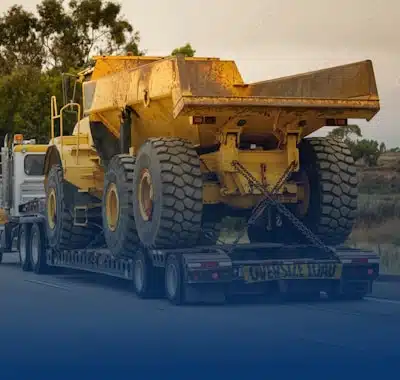
Some trenchers and utility machines can move on flatbeds or step decks. Larger or heavier units may need a lowboy, RGN, or another heavy haul trailer. The correct trailer depends on the machine’s weight, height, loading method, and delivery-site access.
A smaller tracked trencher may load differently from a wheeled utility machine. A compact utility loader may need a trailer that supports stable ramp loading. A larger utility machine may need lower deck height to control clearance.
When heavy haul transport for construction site equipment and machinery is planned properly, the trailer is chosen around the machine’s real job-site condition, not simply the equipment category.
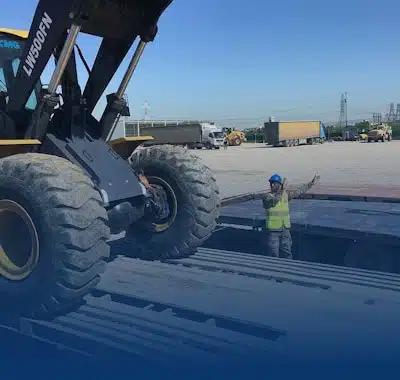
Loading areas are often tight on utility projects
Utility machines frequently work in locations with limited access. They may be picked up or delivered near roads, sidewalks, residential areas, public works zones, easements, parking lots, or active construction corridors. These sites can be tighter than open construction yards.
A safe loading area should provide:
- enough room for trailer alignment
- stable ground under the truck and trailer
- a straight machine approach where possible
- clearance from traffic and workers
- enough room for ramps, winching, or lifting support
- a clear path after unloading
If the site is too narrow or crowded, the loading plan may need extra coordination before the truck arrives.
Tracks, tires, and ground pressure affect loading
Some utility machines run on rubber tracks. Others use tires. Each setup behaves differently during loading. Tracks may offer better grip on some surfaces but can still drag material, climb unevenly, or stress the deck if the approach is poor. Tires may require better traction and more careful ramp contact, especially on wet or loose ground.
The crew should check the loading surface before movement begins. Mud, gravel, slopes, pavement edges, and road shoulders can all affect how the machine approaches the trailer.
A machine used to working in rough areas still needs a controlled path onto the trailer.
Securement should control small movement before it becomes damage
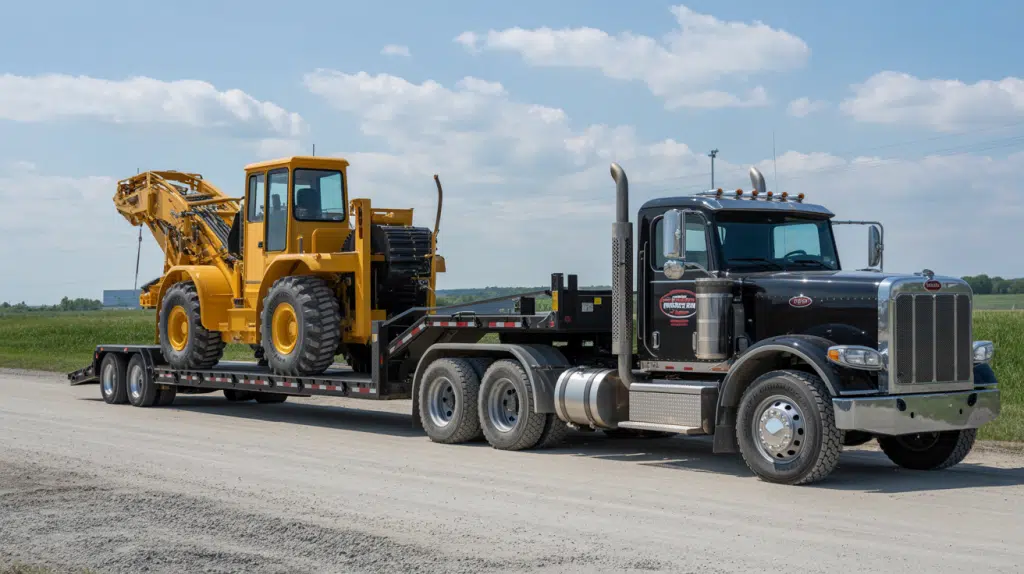
Utility machines are often compact, but compact equipment can still shift, bounce, or vibrate during transport. Securement should hold the machine body and any attachments so they cannot move during braking, turning, or road shock.
A securement plan should check:
- proper tie-down points
- attachment restraint
- chain or strap angles
- protection from rubbing or contact damage
- whether tracks or tires need blocking
- re-check needs after the first travel segment
The load should arrive with the machine and its working parts still in the same controlled position used at pickup.
Utility projects often need precise delivery placement
Unlike larger construction sites with broad laydown areas, utility jobs may have very specific delivery points. The machine may need to unload near a trench line, work zone, road shoulder, staging area, or access path. If it is unloaded in the wrong spot, it may block traffic, crews, materials, or the next phase of work.
Before delivery, the site should confirm:
- correct entrance or access point
- safe unloading area
- traffic-control needs
- ground stability
- overhead hazards
- final machine placement
- path from trailer to work area
- who will receive the equipment
A good delivery plan places the machine where it helps the job, not where it creates another move.
Public road and utility work may require extra coordination
Trenchers and utility machines often support work near public roads, sidewalks, driveways, utility corridors, or municipal infrastructure. This can create extra coordination around traffic, pedestrians, parked vehicles, site boundaries, and temporary work zones.
The transport team may need to consider:
- lane access
- shoulder strength
- temporary traffic control
- parked vehicles
- public visibility
- work-zone timing
- municipal restrictions
A small machine can still create a complicated delivery when the site is public-facing or access-sensitive.
Delivery timing matters for utility crews
Utility work often depends on crews, materials, trench lines, permits, inspections, and traffic-control windows. If the machine arrives before the site is ready, it may sit in the way. If it arrives late, crews may wait while the job falls behind.
That is why heavy haul delivery timing affects construction projects even for smaller utility equipment. The machine should arrive when the crew can unload it, stage it, and begin using it without unnecessary delay.
What contractors should prepare before moving trenchers or utility machines
Contractors can make transport smoother by sharing accurate machine and site details early.
Helpful information includes:
- machine make and model
- operating weight
- track or tire setup
- attachment details
- travel dimensions
- whether the machine runs properly
- pickup and delivery site photos
- road shoulder or access conditions
- traffic-control requirements
- required delivery time
- site contact information
These details help the carrier plan trailer choice, loading method, route access, and delivery placement.
Conclusion
Trenchers and utility machines are transported safely when the carrier understands the machine’s attachment setup, track or tire design, loading method, site access, and delivery timing. These machines may be smaller than many heavy haul loads, but they often work in tight, access-sensitive areas where a poor delivery plan can slow the entire job.
A good transport plan protects the machine, controls the attachment, confirms the loading surface, and places the equipment where the utility crew can use it. When those details are handled early, the machine arrives ready for work instead of becoming another obstacle on the site.