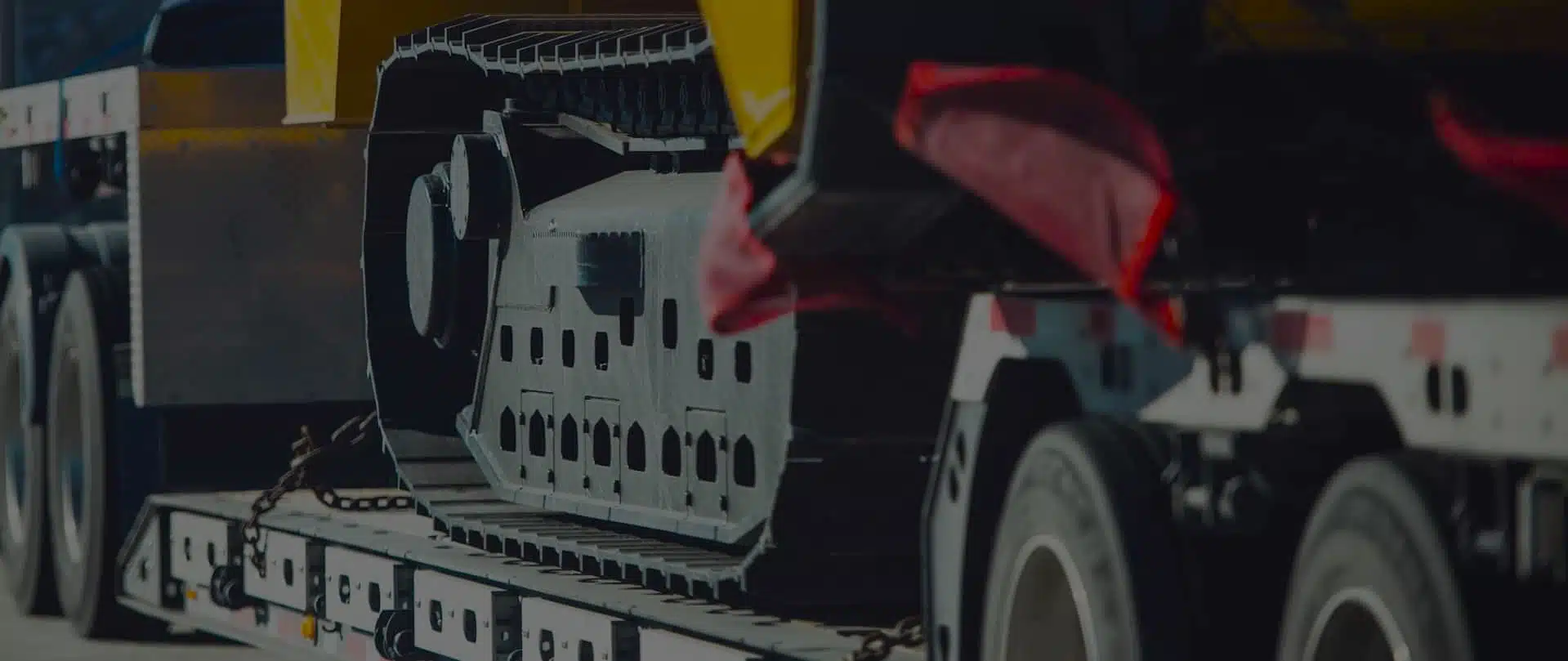
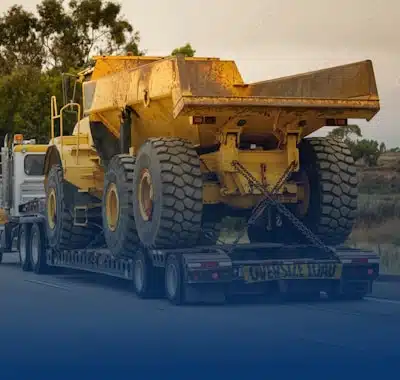
A heavy machine can look perfectly still on a trailer, yet the road is constantly working against it. Every bridge joint, pothole, rough lane, grade change, braking event, and turn sends energy through the trailer and into the load. Over a short distance, that energy may seem minor. Over a long haul, vibration and road shock can loosen contact points, expose weak securement, mark painted surfaces, stress tires or tracks, and create movement where none was visible at pickup.
That is why vibration control belongs inside a complete heavy haul load securement and damage prevention plan. Securement must hold the load, but damage prevention must also consider what repeated road force does after the trailer leaves the yard.
Vibration is not one big event; it is repeated small force
Road shock rarely damages equipment in one dramatic moment. More often, it works slowly.
A chain may rub in the same place for hours. A strap may move slightly across an edge. A bucket may settle lower. A tire may compress differently after the first miles. A machine may shift just enough to change securement tension. These small changes can create visible damage or safety concerns if no one checks the load after it begins traveling.
That is the important difference: a load can be secure at pickup but still need attention after the road begins testing it.
What road shock does to securement systems
Securement systems are built to restrain force, but they still respond to movement. When the trailer hits rough pavement, the load can settle into the deck, blocking can shift slightly, and chains or straps can find a different working tension.
Road shock can cause:
- chain tension to change after the machine settles
- straps to rub or stretch slightly under repeated force
- binders to sit differently after vibration
- blocking or cribbing to shift under pressure
- hooks or anchor points to experience changing pull angles
This does not mean the securement system failed. It means securement needs re-checks because the road changes conditions after departure.
Heavy equipment reacts differently depending on how it sits
Not all equipment absorbs vibration the same way.
Tracked machines transfer road force through tracks and undercarriage contact. Wheeled machines respond through tires and suspension. Industrial machinery may transmit force through a base frame. Generators and power units may carry dense internal components that need steady support. Each cargo type reacts according to its structure.
That is why the machine should not be treated as a generic heavy object. The way it sits on the trailer determines how vibration enters the load.
Contact points become damage points under vibration
A contact point that looks harmless while parked can become a damage point after miles of movement. This is especially true when metal touches paint, chains touch corners, or straps pass over edges without protection.
Repeated vibration can create:
- paint rubs
- strap wear
- chain abrasion
- frame marks
- tire sidewall contact
- track scuffing
- attachment contact damage
This is why protecting paint, tracks, tires, and frames during transport depends heavily on checking where the machine and securement gear make contact before the haul begins.
Attachments can amplify vibration problems
Attachments often act like extensions of the machine. A bucket, boom, blade, fork, ripper, grapple, or mast may bounce, settle, or vibrate differently from the main body. If the attachment is not lowered, locked, removed, or separately restrained, road vibration can slowly turn it into the weakest part of the transport setup.
A raised attachment can increase movement. A poorly supported attachment can rub. A loose attachment can change securement tension. A sharp attachment edge can damage straps or finished surfaces.
This is why attachment control is not only about height or balance. It is also about reducing vibration movement before it starts.
Long-distance moves expose weak planning faster
A short move may hide a weak contact point. A long-distance haul usually reveals it.
The longer the route, the more times the load experiences:
- braking cycles
- bridge joints
- turns and lane changes
- rough pavement
- grade transitions
- acceleration and deceleration
- weather-related road changes
Each event may be small, but together they test the load continuously. That is why long-haul securement should be planned with more margin, more inspection discipline, and more attention to contact protection.
Road quality should influence the securement plan
Securement should reflect the route, not just the cargo. A smooth highway move and a route with rough rural roads, construction zones, steep grades, or repeated bridge crossings do not test equipment the same way.
If the route is expected to be rough, the plan may need:
- better edge protection
- more careful blocking
- earlier re-check stops
- closer attachment restraint
- stronger attention to tire, track, and frame contact
- route-aware placement on the trailer
The road decides what kind of stress the load will experience. The securement plan should be ready for that stress.
The first re-check is where the road tells the truth
The first inspection stop after loading is one of the most valuable moments in a heavy haul move. It shows whether the load stayed seated, whether securement tension changed, and whether vibration created new contact marks.
At the first re-check, crews should look for:
- loose chains or straps
- changed binder position
- shifted blocking
- fresh rub marks
- attachment movement
- tire or track settling
- new contact between the load and trailer
- signs that the machine has moved even slightly
A small adjustment at this point can prevent hours of damage later.
Vibration can affect sensitive equipment more than rugged equipment
Some heavy haul loads are rugged on the outside but sensitive inside. Industrial machines, generators, electrical units, pumps, and plant equipment may not tolerate harsh vibration as well as construction equipment. Even if the exterior looks fine, internal alignment, mounted components, enclosures, or connection points can be affected by repeated shock if the load is poorly supported.
For these loads, the goal is not only to prevent movement. The goal is to create a stable ride that protects the equipment’s working condition.
Customers should understand why re-checks and careful routing matter
A customer may wonder why a driver stops early, adjusts tension, checks contact points, or avoids a rougher route. Those decisions are not delays. They are protection steps.
Re-checks help confirm the load has settled safely. Better routing reduces unnecessary shock. Edge protection prevents cosmetic damage. Attachment control reduces movement. Together, these actions protect the customer’s machine from damage that might otherwise appear only after delivery.
Conclusion
Vibration and road shock affect heavy equipment in transit because the road keeps applying force long after the load is secured. Chains can settle, straps can rub, blocking can shift, attachments can move, and contact points can become damage points over distance. Safe transport depends on anticipating those forces before departure, protecting vulnerable surfaces, controlling attachments, planning re-checks, and adjusting securement when the road reveals change. A quiet, stable delivery is rarely luck. It is the result of planning for the movement that happens even when the machine appears still.