Damage prevention in heavy haul is not only about stopping the equipment from falling, sliding, or shifting. It is also about protecting the surfaces and components that quietly suffer during loading, securement, vibration, and unloading. Paint can rub. Tracks can scrape. Tires can compress against edges. Frames can absorb stress when support points are wrong.
That is why equipment protection belongs inside the full heavy haul load securement and damage prevention process. A machine should not only arrive at the destination. It should arrive in a condition that lets the owner put it back to work with confidence.
Damage usually starts at contact points
Most transport damage begins where two surfaces meet. A chain touches a painted frame. A track edge rests against a deck surface. A tire sits near a sharp edge. A machine frame presses against poor blocking. At first, these contact points may look harmless, but vibration can turn small pressure into visible damage over distance.
That is why the best damage-prevention question is simple:
Where will this machine touch the trailer, the securement gear, or the support material during the entire move?
Once those contact points are known, the hauling team can protect them before the road starts testing the load.
Paint protection is about preventing rub, not just scratches
Paint damage often happens through repeated movement rather than one obvious impact. A chain may rest against a painted surface. A binder may sit too close to a finished panel. A strap may move slightly against an edge. Over hundreds of miles, that small motion can leave marks, chips, or worn areas.
Paint protection usually means:
- avoiding unnecessary chain contact on finished surfaces
- using edge protection where straps or chains may rub
- keeping binders away from painted panels
- checking for new contact marks during early re-checks
- choosing securement angles that control the load without grinding against it
A machine built for hard work can still lose value and customer trust when preventable cosmetic damage appears after transport.
Tracks need support and careful loading angles
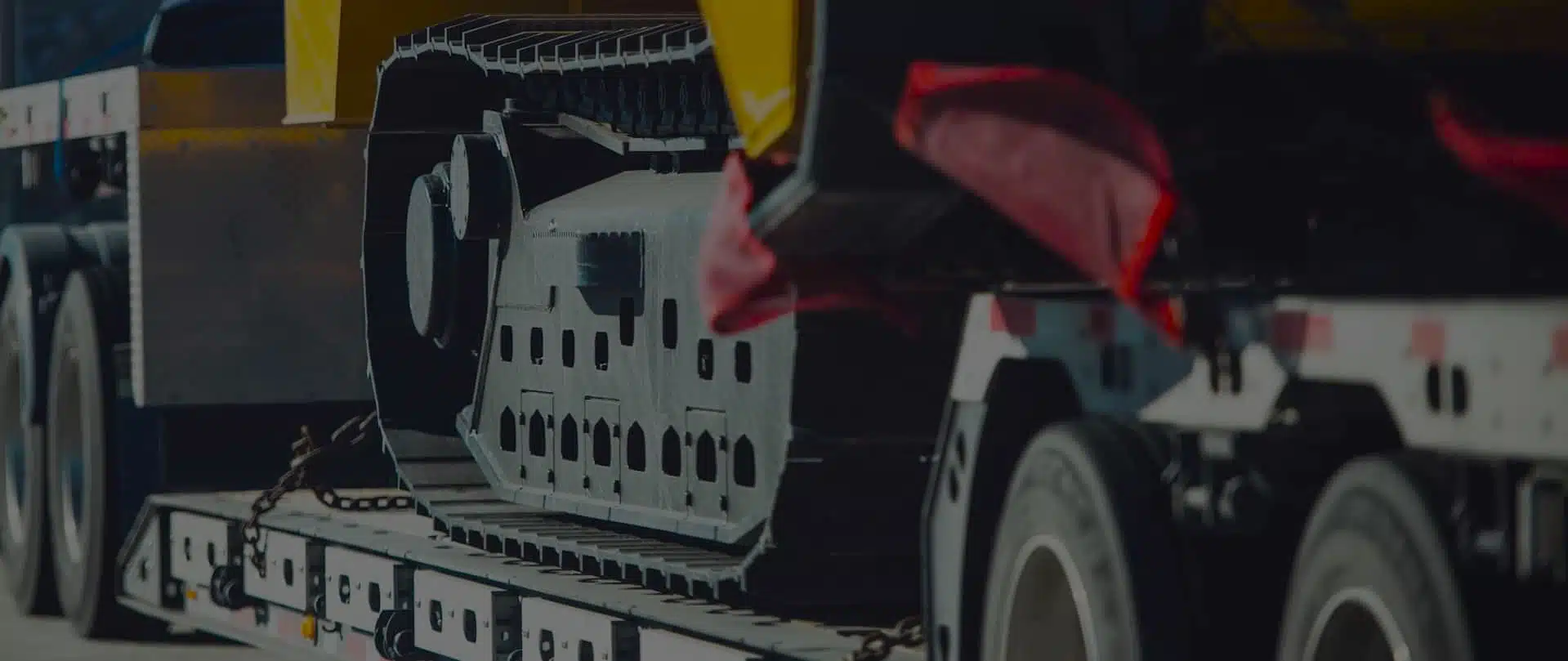
Tracked equipment carries weight differently from wheeled equipment. Tracks spread force across a longer contact area, but they also create unique risks during loading and deck placement. A poor ramp angle, uneven deck support, or rough transition can stress track components before the machine even reaches the final securement position.
Track protection depends on:
- controlled loading angle
- stable ramp contact
- even deck support under both tracks
- avoiding sharp deck edges or weak support surfaces
- checking that the machine sits squarely before securement begins
This matters especially for dozers, excavators, compact track loaders, and other machines where the undercarriage represents a large part of the equipment’s value.
Tires can be damaged by pressure, edges, and poor positioning
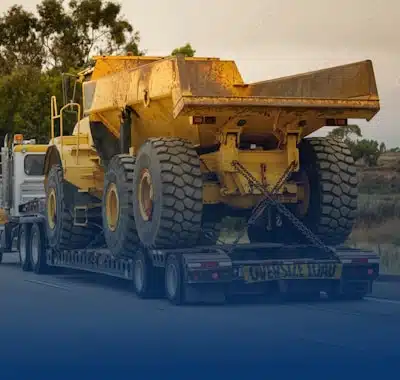
Tires may look less complicated than tracks, but transport can still damage them. A tire placed against a sharp edge, a deck gap, or uneven support can suffer sidewall stress. Poor inflation can change how the machine settles on the trailer. Incorrect placement can also increase pressure on one tire or axle position more than necessary.
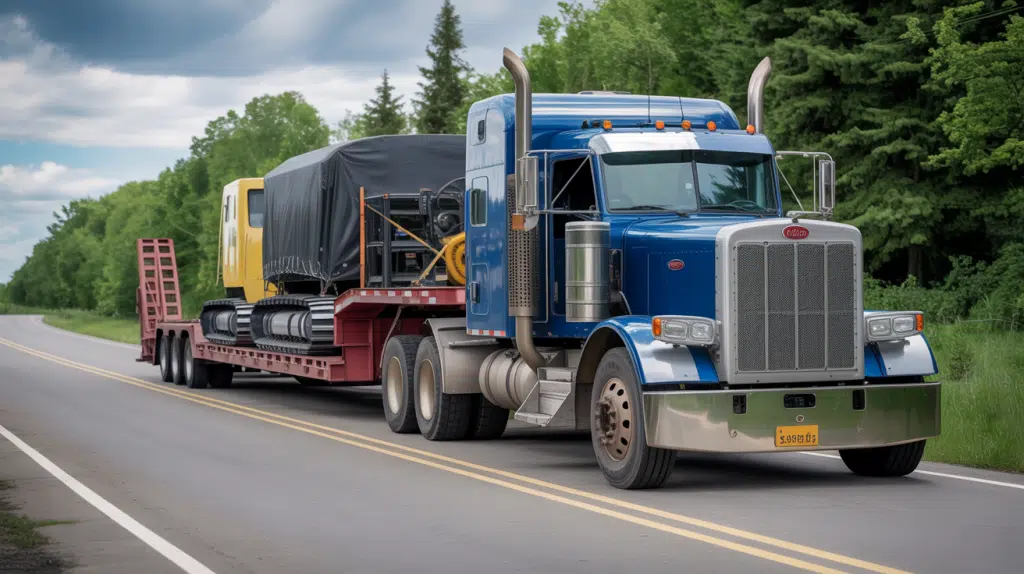
Tire protection usually starts with inspection before loading. The crew should check for visible cuts, low pressure, sidewall weakness, or uneven wear. Then the machine should be placed so the tires sit fully supported and away from contact points that could damage them during travel.
A tire does not need to fail on the road to create a problem. Even small sidewall damage can become an expensive issue after delivery.
Frames should be supported through the right load path
A machine frame is strong, but it is not strong in every direction or at every point. Frames are designed to carry force through certain structural areas. When poor blocking, incorrect lifting, or uneven deck contact puts pressure into weaker areas, damage can happen quietly.
Frame protection depends on understanding how the machine carries weight. Base-frame equipment, industrial machinery, generators, and compact construction machines may all need support in different places. The trailer deck, blocking, and securement should support the machine where the structure is meant to carry load.
This is why damage prevention is closely connected to pre-transport inspections that identify weak points before loading. The inspection helps show where support is safe, where contact should be avoided, and where protection is needed.
Edge protection should be planned before tension is applied
Edge protection is often treated as a small detail, but it can decide whether securement protects the machine or damages it. Chains, straps, and binders should not cut, scrape, crush, or rub against surfaces that were never meant to receive that force.
Edge protection can help protect:
- painted frame rails
- hydraulic lines near securement paths
- tires and rubber parts
- sharp trailer or machine edges
- straps passing over corners
- contact zones where vibration may create rubbing
The best time to add protection is before final tensioning. Once chains and straps are tight, crews may be less likely to reposition them unless a problem is obvious.
Vibration turns small contact into real damage
Heavy haul transport is full of repeated motion. The trailer moves over road joints, bumps, grades, and rough surfaces. The load settles. Securement gear tightens, relaxes, and finds its working position. A contact point that looks fine in the yard may become a rub mark after the first miles.
This is why early inspection stops matter. The first re-check can reveal:
- fresh paint rubs
- chain movement
- strap edge wear
- shifted blocking
- tire contact against an edge
- track movement on the deck
- frame pressure where support looks uneven
A small correction at this stage can prevent visible damage at delivery.
Attachment position can protect or expose the machine
Attachments often change where damage can occur. A bucket may rest against the deck. A blade may sit close to a trailer edge. Forks may shift. A boom may create rubbing against a restraint point. If the attachment is positioned poorly, the machine may be technically secured while still exposed to avoidable damage.
A cleaner transport setup usually places attachments where they are compact, stable, and protected from unnecessary contact. If the attachment creates too much risk, moving it separately may be the better option.
Loading and unloading are high-risk damage moments
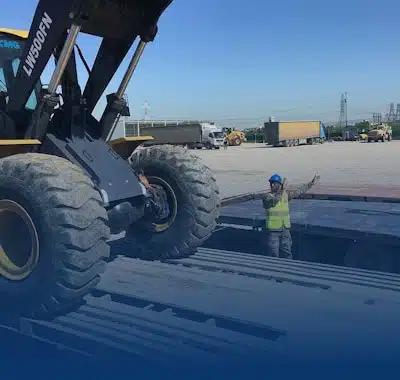
Some damage happens on the road, but loading and unloading are often more dangerous for paint, tracks, tires, and frames. The machine is moving, the trailer angle is changing, and the operator may be working with limited space or uneven ground.
Damage risk increases when:
- ramps are too steep
- ground is soft or uneven
- the machine is not aligned straight
- attachments are not positioned correctly
- the trailer is not stable
- unloading space is tighter than expected
A careful transport plan treats loading and unloading as part of damage prevention, not just the beginning and end of the haul.
What customers should look for after delivery
After delivery, customers should inspect the machine before it returns to work. This protects both the equipment and the transport record.
Useful checks include:
- paint rubs near securement areas
- tire sidewalls and tread contact points
- track alignment and visible undercarriage marks
- frame areas where blocking or support was used
- attachment position and contact marks
- leaks or loose parts that were not present before transport
This inspection does not need to be confrontational. It simply confirms that the equipment arrived cleanly and is ready for service.
Conclusion
Protecting paint, tracks, tires, and frames during transport requires attention to the quiet details: contact points, loading angles, support surfaces, securement paths, edge protection, vibration checks, and delivery inspection. Heavy equipment may be built to work in harsh conditions, but transport creates a different kind of stress. When those stress points are anticipated before the move begins, the machine arrives not only secured, but protected. That is the difference between simply moving equipment and delivering it with care.