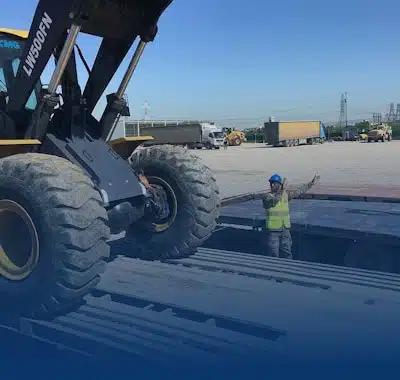
A wheel loader usually looks easier to move than a tracked machine. It rolls, it steers, and it often loads faster than a dozer or excavator. Even so, safe transport depends on preparation, not convenience. The bucket changes front-end weight. The articulation joint changes how the machine sits and moves. Tire condition changes stability on ramps and trailers. Because of that, a wheel loader should be prepared deliberately before it ever climbs onto the deck.
For the wider transport framework behind these decisions, see how different types of heavy equipment are transported safely. A wheel loader may be simpler to load than some other machines, but it still needs its own transport method.
The first goal is to make the machine travel smaller, calmer, and more stable
A wheel loader on a job site is built for lifting, carrying, and turning. A wheel loader on the road needs something different. It needs a lower profile, fewer moving parts, and a weight balance that stays predictable under braking and vibration.
That usually means the preparation process focuses on three things first:
- reducing unnecessary travel height
- controlling bucket position and articulation
- checking whether the machine is actually road-ready to load
If those three are handled well, everything that follows becomes easier.
Bucket position is one of the biggest preparation decisions
The bucket is not just an attachment. It is the part that often changes the loader’s transport shape the most. If it sits too high, total travel height climbs quickly. If it sits poorly, the front end can feel heavier than expected during loading and placement.
A safer preparation plan usually lowers the bucket into a compact transport position and confirms that it will not shift, bounce, or create avoidable height. On some jobs, the right choice may even be to remove an attachment entirely if it makes the route more difficult than it needs to be.
That same logic appears with other equipment too. For example, transport prep becomes much more controlled when operators think about attachments the way they are handled in long-distance excavator transport planning, where height and attachment position are treated as part of the route strategy, not just part of the machine.
Articulation should be controlled before loading
A wheel loader bends in the middle by design. That articulation is useful on site, but during transport it needs to be managed so the machine stays straight and stable. If articulation is left loose or poorly controlled, the loader can feel less settled on the trailer and more difficult to secure properly.
That is why preparation often includes:
- straightening the machine fully before loading
- confirming articulation locks or transport restraints where applicable
- checking that the machine will stay aligned once positioned on the deck
A centered, straight loader is simply easier to place and secure than one that still behaves like it is ready to work.
Tires matter more than people expect during transport prep
Because the machine rides on tires, the tire condition becomes part of the transport condition. Uneven inflation, visible damage, or weak tires can make loading feel unstable and can affect how the machine settles onto the trailer. Tire condition also changes how level the machine sits, which can slightly affect overall transport height and balance.
This does not mean the transport team is replacing tires before every move. It does mean they should not ignore them. A wheel loader that loads unevenly often gives small warnings first.
Trailer choice should match height and loading behavior
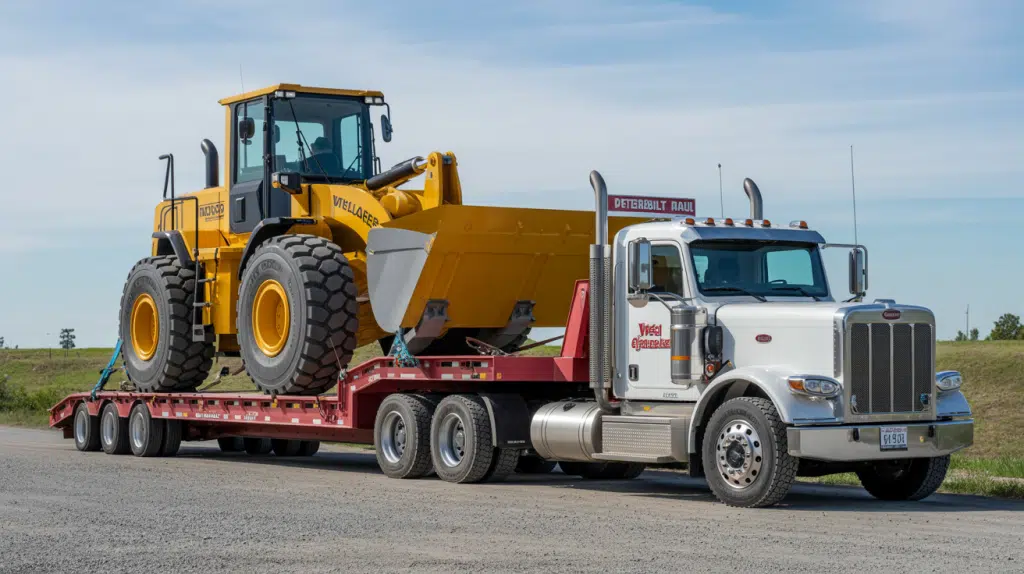
Wheel loaders are often transported on low-profile trailer setups that keep overall height manageable while still allowing straightforward drive-on loading. That combination is valuable because wheel loaders tend to be simpler to load than tracked equipment, but they can still become overheight or awkwardly balanced if the wrong trailer is used.
The right trailer usually depends on:
- total machine height with the bucket in travel position
- operating weight and axle implications
- how much deck height the route can tolerate
- how easy it will be to load and unload at both ends
If route height is already tight, trailer prep should be coordinated with clearance planning for oversized loads before the move is committed.
Placement on the deck should solve weight, not create new problems
A wheel loader may appear naturally balanced because it sits on four tires, but the front bucket and lift-arm structure often make the machine more front-sensitive than it looks. That matters when positioning it on the trailer.
The safest placement usually aims to:
- keep the machine centered left to right
- avoid forcing too much weight into one axle group
- support stable trailer handling at road speed
- leave securement angles that actually work in practice
If the machine is placed carelessly, the result can be a transport setup that looks fine while parked but behaves poorly under braking or rough pavement.
Securement should hold the machine and control the equipment
With wheel loaders, securement is not only about restraining the machine body. It is also about controlling the bucket and making sure the loader stays settled on the deck during motion. A good securement plan respects the loader as a working machine with moving components, not just as a heavy object on wheels.
That often includes:
- using proper securement points on the machine
- confirming that the bucket is restrained or positioned safely
- checking for movement after the first miles
- making sure the machine remains seated and aligned on the trailer
A wheel loader that can roll, pivot, and articulate needs a securement plan that anticipates those tendencies instead of reacting to them later.
Site conditions still affect preparation
Preparation does not happen in perfect conditions every time. Muddy loading areas, soft ground, narrow access, or uneven approaches can all change how a wheel loader should be loaded and staged. On some jobs, the machine itself is ready, but the pickup environment creates the real challenge.
That is why site access should be reviewed before the trailer arrives. Good transport prep is partly about the machine and partly about the place where the machine must meet the trailer.
What owners and fleet teams should confirm before pickup
The cleanest wheel loader moves often begin with simple but accurate information. Before the transport day, it helps to confirm:
- exact model and operating weight
- bucket type or other front attachment
- overall dimensions in travel configuration
- whether articulation restraints or transport locks are in place
- pickup and delivery site conditions for loading
These details do not make the move more complicated. They make it more controlled.
Conclusion
Looking for reliable heavy equipment transport? Freedom Heavy Haul offers competitive rates and professional service for machinery shipping across the entire United States.
Preparing a wheel loader for heavy haul transport means making the machine more compact, more balanced, and easier to control before it ever touches the trailer. Bucket position, articulation control, tire condition, trailer choice, deck placement, and securement all shape how safely the loader will travel. When those details are handled early, the move feels smoother and more predictable from loading to delivery. And in heavy haul, predictable usually means the preparation was done right.