A pre-transport inspection is the quiet checkpoint between “ready to load” and “ready to move.” It gives the carrier, customer, and site crew a chance to see the equipment clearly before road forces, trailer movement, and securement tension begin testing it. Without that inspection, small issues can travel unnoticed and become much harder to explain after delivery.
In heavy haul work, inspection is not just a formality. It is one of the most practical ways to protect equipment value, reduce disputes, and prevent avoidable damage before the trailer ever leaves the pickup site.
Pre-transport inspection also belongs inside the wider heavy haul load securement and damage prevention process, because securement works best when the machine’s condition, attachment position, and support points are understood before the load is restrained.
Inspection creates the starting record
Before transport, everyone needs to know the equipment’s real condition. Scratches, dents, worn tires, loose panels, leaking hoses, damaged guards, and attachment wear should be identified before loading begins. This protects the customer and the carrier because the condition record creates a clear baseline.
That baseline matters after delivery. If a machine arrives with a mark, rub, or leak, the team can compare it with the starting condition instead of relying on memory. In high-value equipment transport, that clarity can prevent confusion and unnecessary conflict.
The inspection should follow the machine’s weak points
Every machine has areas that deserve closer attention. A bulldozer may need a track and undercarriage review. A wheel loader may need tire, articulation, and bucket checks. An excavator may need boom, arm, bucket, and counterweight review. A generator may need base-frame, enclosure, and lifting-point checks.
A useful inspection is not random. It follows the equipment’s design.
That means the crew should ask:
- where does this machine carry weight
- what parts can move during transport
- what surfaces can be damaged by chain or strap contact
- what components are already worn, loose, cracked, or leaking
- what areas will be harder to inspect after loading
This approach catches the damage-prone areas before the machine is committed to the trailer.
Attachments should be inspected before they are positioned
Attachments often create damage risk because they change how the equipment travels. Buckets, blades, forks, booms, rippers, grapples, and masts may be heavy, movable, sharp-edged, or awkward to secure. If an attachment is already loose, cracked, poorly mounted, or sitting in the wrong position, transport can make the issue worse.
That is why attachment inspection should happen before final travel positioning. Once the team knows the attachment condition, they can decide whether it should be lowered, locked, removed, or restrained separately.
This step connects directly with how attachment position affects load securement, because a safe travel position is much easier to choose when the attachment’s condition is already known.
Leaks and fluid issues should be identified early
A small leak can look harmless in the yard, but transport can make it more noticeable. Vibration, deck angle, tie-down tension, and loading movement may expose weak seals, hoses, fittings, or caps. If a leak appears after loading, the crew may not know whether it existed before pickup or developed during the move.
Pre-transport inspection helps answer that question early.
The inspection should check:
- hydraulic lines and fittings
- fuel caps and tank areas
- coolant or oil seepage
- wet areas around cylinders
- fluid marks under the machine before loading
This is especially important with equipment that will travel long distances or across rough roads.
Tires, tracks, and contact surfaces deserve careful review
The parts touching the trailer often receive the most transport stress. Tires compress. Tracks settle. Skids and frames press into support points. If these areas are already damaged or poorly positioned, transport can increase the problem.
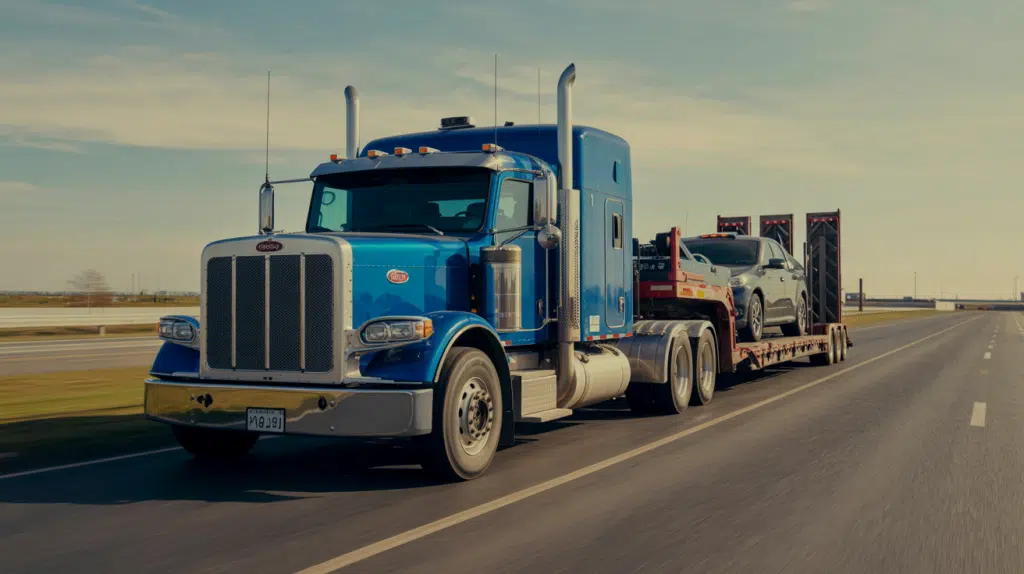
A pre-transport inspection should check:
- tire pressure and visible sidewall damage
- track condition and loose components
- sharp edges or debris on contact surfaces
- whether the machine will sit evenly on the deck
- whether support points match the machine’s structure
This matters because loading and securement can only protect the equipment if the equipment is already sitting on the trailer correctly.
Securement gear should be inspected before it touches the load
Damage prevention also depends on the gear used to hold the equipment. A worn strap, damaged chain, bent hook, weak binder, or rough edge can create both safety issues and equipment damage. The securement gear should be checked before it is placed against painted surfaces, frames, tires, or attachments.
The inspection should confirm:
- chains are not cracked, twisted, or badly worn
- straps are not cut, frayed, or weakened
- hooks and binders are functional
- edge protection is available where needed
- trailer anchor points are in usable condition
This prevents a common problem: using securement gear to protect the load while the gear itself becomes the source of damage.
Loading-area inspection prevents damage before the machine moves
Sometimes the equipment is ready, but the loading environment is not. A muddy surface, steep approach, loose gravel, narrow access, or uneven trailer position can create damage before the highway trip begins. Machines can scrape, bottom out, twist, or load off-center when the loading area is ignored.
A quick loading-area inspection should confirm:
- the trailer can align safely
- ramps sit evenly and securely
- the ground can support the machine
- there is enough straight approach space
- no debris can damage tires, tracks, or undercarriage
This step is simple, but it prevents many avoidable loading problems.
Inspection improves securement decisions
A good inspection does more than identify damage. It also tells the crew how to secure the machine. If a tie-down point is damaged, blocked, or poorly positioned, the team can choose a better connection before tension is applied. If a painted surface is vulnerable, edge protection can be placed early. If an attachment is unstable, it can be repositioned before final securement.
This is where inspection and securement become one process. The inspection reveals what the securement plan must respect.
Photos and notes protect everyone involved
Written notes and photos are useful because heavy haul moves involve multiple people: site contacts, drivers, dispatchers, customers, and sometimes receiving crews. A clear inspection record helps everyone understand what the equipment looked like before the move.
Good records usually include:
- overall machine condition
- close-ups of existing damage
- attachment position
- tire or track condition
- visible leaks
- securement-sensitive areas
- loading or access concerns
These records do not need to be complicated. They need to be clear enough to be useful later.
Pre-transport inspection reduces delivery surprises
The best deliveries are calm because the risks were already seen earlier. When inspection is skipped, delivery can become a guessing game. Was that scratch already there? Was that leak new? Was the attachment loose before loading? Was the tire already damaged?
Pre-transport inspection removes much of that uncertainty. It helps the carrier protect the machine and helps the customer trust the process.
Conclusion
Pre-transport inspections prevent equipment damage because they reveal condition, movement risks, weak points, attachment concerns, leaks, contact surfaces, and loading hazards before transport begins. They turn the pickup site into a controlled checkpoint instead of a rushed handoff. When a machine is inspected carefully, secured according to its real condition, and documented before the road adds stress, the entire move becomes cleaner and more dependable. In heavy haul transport, the safest damage is the damage prevented before the first mile.