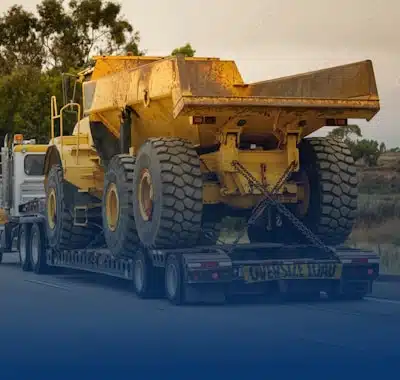
Flatbed trailers are enough for heavy equipment hauling when the load is manageable in height, weight, width, securement, and loading method. Not every machine needs a lowboy, RGN, double-drop, extendable, or multi-axle trailer. Sometimes the safest and most efficient choice is the simpler one, as long as the equipment truly fits the trailer and the route.
A flatbed works best when the cargo does not create major clearance problems, does not require a lower deck, does not need specialized axle distribution, and can be loaded and secured without unusual handling. The key is knowing when a flatbed is practical and when it becomes a compromise.
Flatbeds are useful for simpler heavy equipment moves
A flatbed trailer provides an open deck, straightforward loading options, and flexible securement access. That makes it useful for equipment and cargo that do not need a deep drop, detachable gooseneck, or special support system.
Flatbeds may work for:
- smaller construction equipment
- compact machinery
- attachments and implements
- palletized industrial cargo
- lower-profile equipment
- machine parts and components
- cargo that can be loaded by forklift or crane
When a load fits within practical height, weight, and securement limits, a flatbed can keep the move efficient without adding unnecessary trailer complexity.
Height is usually the first question
A flatbed sits higher than many specialized heavy haul trailers. That means the cargo height has to be checked carefully before choosing this option. A machine that looks reasonable on the ground may become too tall once it sits on a flatbed deck.
Flatbeds are usually enough when the loaded height does not create serious concerns with bridges, overpasses, utility lines, traffic signals, tree canopies, or facility entrances.
When height starts to become tight, the move may shift toward a lower trailer. This is why heavy haul trailer types and their best use cases should be compared around the actual loaded profile, not only the equipment category.
Weight must stay within the trailer’s practical limits
A flatbed may carry heavy cargo, but it is not the right choice for every heavy load. Dense equipment, industrial machinery, transformers, or heavy components may require a trailer with more axle support or a stronger heavy haul configuration.
Before choosing a flatbed, the carrier should confirm:
- cargo weight
- deck capacity
- axle limits
- center of gravity
- support points
- securement access
- loading method
- route restrictions
If the equipment is too dense or concentrated, the move may need a multi-axle or modular trailer instead of a standard flatbed.
Flatbeds work when loading is simple and controlled
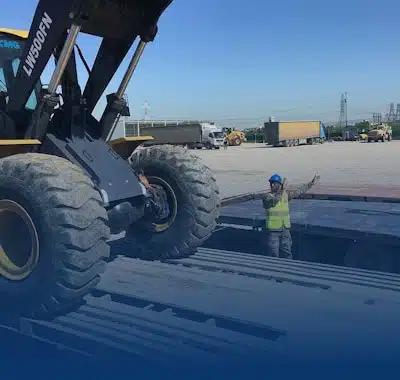
Flatbeds can work well when the cargo can be loaded safely by forklift, crane, ramps, or another practical method. The loading site must have enough space, stable ground, and the right equipment to place the load correctly on the deck.
A flatbed may be enough when:
- the equipment can be lifted onto the deck
- the machine can be ramp-loaded safely
- the cargo does not require a lower approach angle
- the site has enough room for loading equipment
- the load can be placed without awkward repositioning
If the machine needs easier drive-on loading with a lower approach, an RGN trailer for oversized machinery may be safer than forcing the equipment onto a higher flatbed.
Securement access is one of the flatbed’s strengths
One advantage of a flatbed is open access around the load. Chains, straps, binders, edge protection, blocking, and securement hardware can often be placed more easily because the deck is open and accessible.
This can be helpful for:
- attachments
- machine parts
- compact equipment
- crates and skids
- lower-profile machinery
- irregular but manageable cargo
However, open access does not remove the need for proper securement. The load still needs correct tie-down points, safe restraint angles, and protection against movement during braking, turning, vibration, and road shock.
Flatbeds are practical for attachments and smaller components
Many heavy equipment moves involve more than the main machine. Buckets, blades, forks, rippers, booms, counterweights, support frames, and machine components may travel separately. A flatbed can be a practical choice for these items when they are not too tall, too heavy, or too awkward for the deck.
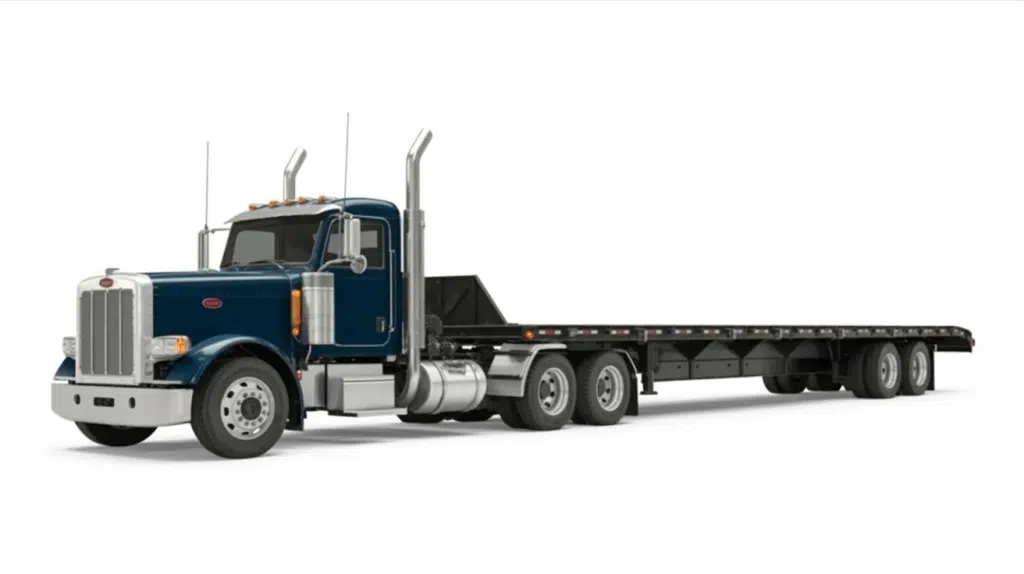
In these cases, the flatbed supports the larger project without requiring a specialized trailer for every piece. The carrier still needs to confirm weight, securement, and loading method, but the trailer choice may remain simple.
Route planning is still required
A flatbed may be less complex than other heavy haul trailers, but the route still matters. Width, height, cargo overhang, bridge limits, road restrictions, and delivery access can still affect the move.
A flatbed load may need route review when:
- the cargo is wide
- the loaded height is close to limits
- the cargo extends beyond the deck
- the delivery site has tight access
- local travel restrictions apply
- escort requirements may be triggered
A simpler trailer does not automatically mean a simple route.
When a flatbed may not be enough
A flatbed becomes the wrong choice when it forces the cargo into a risky transport profile. If the load rides too high, loads poorly, exceeds practical weight limits, or cannot be secured cleanly, a different trailer is usually better.
A flatbed may not be enough when:
- the cargo is too tall once loaded
- the equipment needs a lower loading angle
- the machine is too heavy for the axle setup
- the load is too long for safe support
- the cargo needs special cradles or modular support
- the route has strict clearance limits
- the delivery site cannot support the loading or unloading method
In these situations, choosing a flatbed only because it is available can create more problems than it solves.
Flatbed vs step deck: the height difference matters
Flatbeds and step decks can both handle open-deck cargo, but the height difference is important. If the load is slightly too tall for a flatbed, a step deck may solve the problem without moving to a deeper specialty trailer.
That is why step deck trailers are used in heavy haul transport when a load needs moderate height reduction but does not require a lowboy, RGN, or double-drop trailer. The decision often comes down to how much deck height the cargo can tolerate.
Flatbeds can reduce cost and complexity when used correctly
A flatbed may be more available, simpler to schedule, and easier to load for certain cargo. If the load truly fits, that simplicity can reduce unnecessary complexity in the move.
But the cost advantage only matters when the trailer is suitable. A flatbed that causes height problems, loading delays, route revisions, or securement challenges can become more expensive than choosing the correct specialized trailer from the beginning.
The best value comes from using a flatbed when it is genuinely enough, not when it is merely convenient.
What customers should share before requesting flatbed hauling
Customers can help the carrier decide whether a flatbed is suitable by providing complete load and site details.
Useful information includes:
- equipment or cargo type
- weight
- height, width, and length in transport condition
- attachment details
- photos of the load
- lifting or loading method
- pickup and delivery access
- overhead hazards
- site ground condition
- delivery deadline
These details help confirm whether the load fits a flatbed safely or needs a lower, longer, stronger, or more specialized trailer.
Conclusion
Flatbed trailers are enough for heavy equipment hauling when the cargo is low enough, light enough, stable enough, and simple enough to load, secure, route, and deliver safely. They are practical for smaller equipment, attachments, components, and manageable industrial cargo that does not require a lower deck or specialized axle support.
The main decision is not whether a flatbed can physically carry the load. The better question is whether it can carry the load without creating height, weight, loading, securement, or route problems. When the answer is yes, a flatbed can be the simplest and most efficient trailer for the job.