Delivery is not just the end of a heavy haul move. It is the moment when the customer can confirm that the machine arrived in the condition expected, unloads normally, and is ready for work. A good post-delivery inspection does not need to be complicated, but it should be careful enough to catch transport-related marks, movement, leaks, loose parts, or attachment changes before the equipment goes back into service.
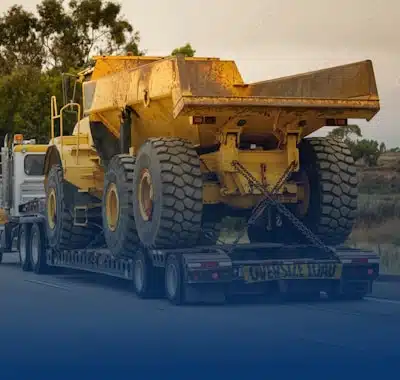
This final check is part of a complete heavy haul load securement and damage prevention process, because the work of protecting equipment should continue until the machine is safely off the trailer and ready to operate.
Start with the overall condition before focusing on small details
Before checking individual parts, look at the machine as a whole. This first walkaround gives you a quick sense of whether anything looks different from the pickup condition. The equipment should appear stable, intact, and free from obvious new damage.
During this first look, check for:
- fresh dents or scrapes
- loose panels or covers
- shifted attachments
- broken lights, mirrors, or guards
- new fluid marks
- unusual tire, track, or frame contact marks
This broad inspection helps you spot obvious concerns before the machine is moved away from the delivery area.
Compare visible marks against the pickup condition
Some equipment already has scratches, dents, worn paint, leaks, or old work-site damage before transport begins. That is normal for many working machines. The important question after delivery is whether anything new appeared during the haul.
If photos or notes were taken before pickup, compare them with the current condition. This is why pre-transport inspections create a useful condition record before the equipment ever leaves the pickup site.
A clear comparison protects everyone. It helps the customer understand what changed, and it helps the carrier confirm whether the equipment arrived as expected.
Check securement contact areas first
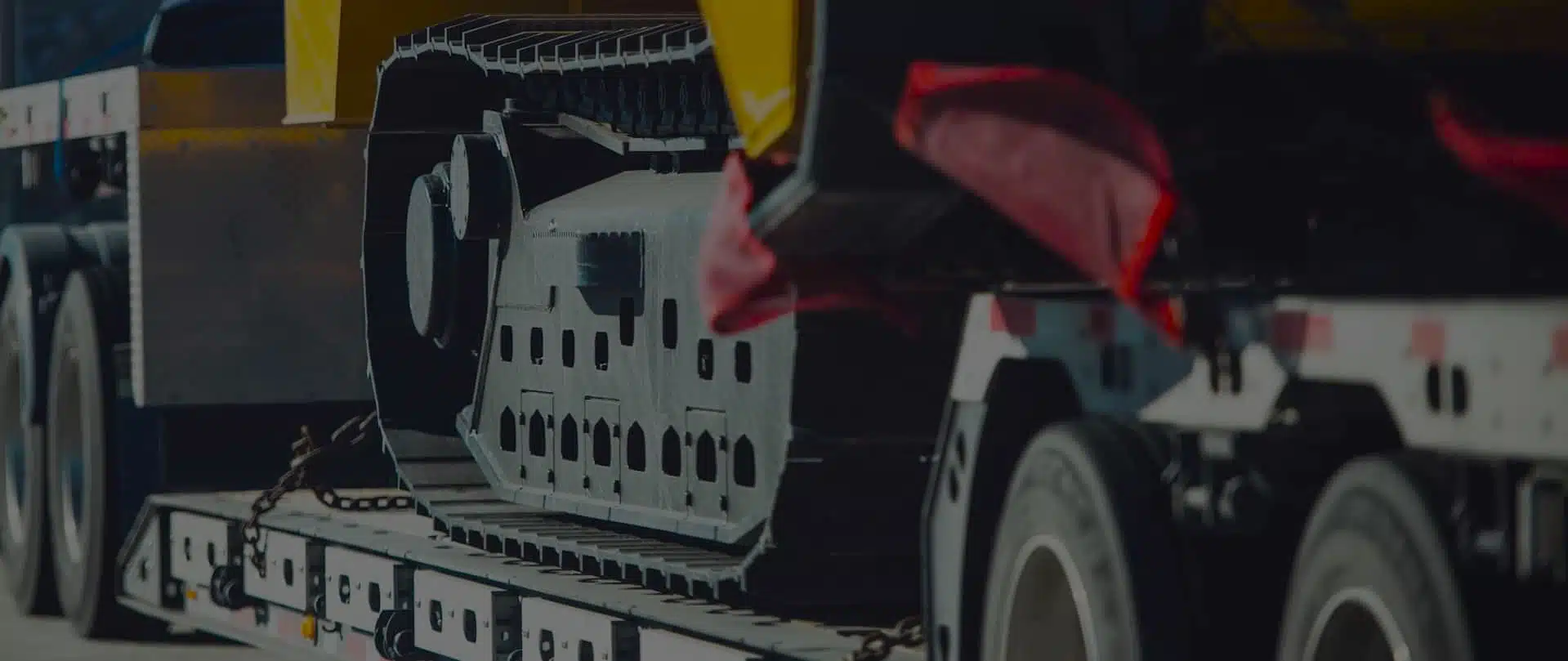
Many transport marks appear where chains, straps, binders, hooks, blocking, or edge protection touched the machine. These are the areas most likely to show rubbing, pressure, or surface marks after a long trip.
Look closely at:
- frame rails
- tie-down points
- painted areas near chains or straps
- bucket edges or blade edges
- track frames
- trailer contact areas
- blocking or cribbing contact points
Small rub marks may not affect machine function, but they should still be noted. If a contact point looks deeper than normal surface wear, photograph it before the machine is moved.
Inspect tie-down points after unloading pressure is released
Tie-down points can reveal whether the load was restrained cleanly. A proper tie-down point should not be bent, cracked, pulled, or damaged after transport. If a chain or hook was attached near a weak area, signs of stress may appear around the connection.
After delivery, check:
- designated tie-down lugs
- hook contact areas
- nearby brackets or guards
- frame areas around restraint points
- any paint flaking or deformation near securement locations
A good securement setup should hold the machine without harming the points used to restrain it.
Look at tires, tracks, and undercarriage areas
Tires and tracks carry a lot of transport stress because they are where the machine meets the trailer. Even if the road move was smooth, loading, unloading, deck contact, and tie-down pressure can affect these areas.
For wheeled equipment, check:
- tire sidewalls
- tread cuts or unusual marks
- pressure concerns
- signs of edge contact
- wheel or rim damage
For tracked equipment, check:
- track pads
- rollers and undercarriage visibility points
- fresh scraping
- uneven seating marks
- debris trapped during loading or unloading
These checks are especially important before the equipment goes straight back into work.
Confirm attachment position and condition
Attachments often create the most overlooked delivery issues. Buckets, blades, forks, booms, rippers, grapples, and masts may shift slightly during transport or show contact marks from securement, blocking, or trailer surfaces.

After delivery, confirm:
- the attachment is still in safe position
- pins, locks, and latches look normal
- hydraulic lines are not pinched or rubbed
- edges are not newly bent or scraped
- the attachment moves normally if tested safely
If the attachment traveled separately, check it with the same care as the main machine. A small attachment can still be expensive if it arrives damaged.
Watch for leaks before and after unloading
Fluid leaks should be checked while the machine is still near the trailer and again after it is unloaded. Some leaks become more visible once the equipment is moved, especially if transport vibration disturbed a weak fitting, hose, cap, or seal.
Look for:
- hydraulic fluid
- engine oil
- coolant
- fuel
- wet areas around cylinders
- fresh fluid under the machine
A leak does not automatically mean transport caused damage, but it should be documented immediately so the condition is clear.
Inspect paint, frames, and exposed surfaces
Paint and frame marks are often the easiest damage to notice after delivery. They may come from chains, straps, road vibration, loading contact, or trailer deck movement. Some marks are cosmetic, while others may point to poor contact or pressure during transport.
Check:
- painted panels
- frame rails
- counterweights
- guards
- steps
- handrails
- attachment surfaces
- exposed corners
The same careful eye used for protecting paint, tracks, tires, and frames during transport should continue at delivery, because this is when the final condition becomes visible.
Listen and observe during unloading
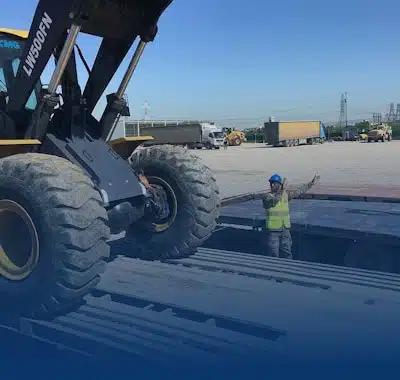
The unloading process can reveal issues that are not obvious while the machine is still parked. If the equipment drives, rolls, lifts, or articulates during unloading, pay attention to anything unusual.
Watch and listen for:
- abnormal noises
- dragging or scraping
- uneven movement
- difficulty steering or rolling
- attachment movement that seems uncontrolled
- warning lights or unusual operating behavior
The machine does not need a full mechanical diagnosis at delivery, but it should unload in a way that feels normal for that equipment type.
Document concerns before the equipment leaves the delivery area
If anything looks wrong, document it before the machine is moved far from the delivery point. Take clear photos from multiple angles and note the location, time, and visible condition. If the driver or site contact is present, confirm the concern while everyone can still inspect the same area.
Useful documentation includes:
- wide photos of the machine
- close-ups of marks or damage
- photos of securement contact areas
- notes about leaks or loose parts
- delivery condition compared with pickup photos
- any unloading observations
This protects the customer, the carrier, and the project record.
Do a final readiness check before putting the machine to work
Once the machine is unloaded and inspected, the final question is simple: is it ready to work?
Before sending it into service, confirm:
- attachments are secure
- tires or tracks look safe
- no new leaks are visible
- controls respond normally if tested
- no loose parts remain
- no damage needs immediate attention
This final step turns delivery into a clean handoff instead of a rushed transition.
Conclusion
Customers should inspect heavy equipment after delivery because transport is not complete until the machine is safely unloaded, checked, and ready for work. A careful post-delivery inspection reviews the overall condition, securement contact areas, tie-down points, tires, tracks, attachments, leaks, paint, frames, and unloading behavior. These checks do not need to be dramatic or complicated. They simply create confidence that the equipment arrived properly protected. In heavy haul transport, a successful delivery is not only when the machine reaches the site; it is when the customer can look it over and trust that it is ready for the job ahead.