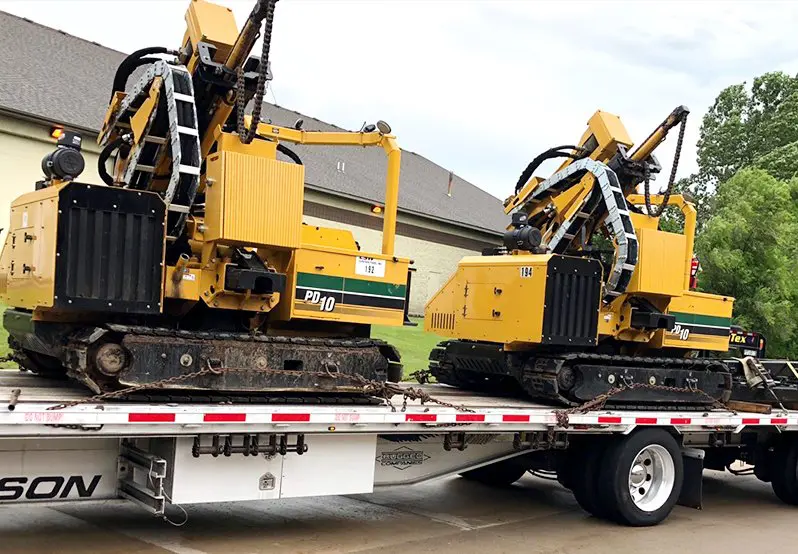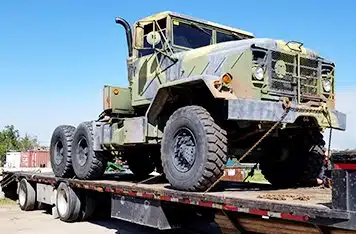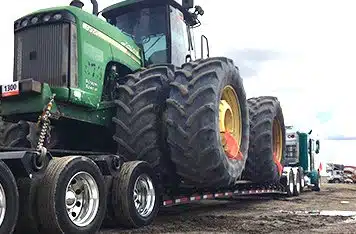






















Heavy haul trucking is a difficult and challenging job that requires a special set of skills and knowledge. Heavy haul truckers must be able to safely transport large and heavy loads from point A to point B, often while navigating difficult terrain and hazardous conditions. The journey from Oregon to Utah is no different, and presents its own unique challenges.
Major Highways
When shipping a heavy haul from Oregon to Utah, truckers must be familiar with the major highways that traverse the two states. Oregon's main arteries for heavy haul trucking are Interstate 5 and US Route 97. Interstate 5 is the main north-south corridor of the state, and runs through the Cascade Mountains, over the Columbia River, and into the Willamette Valley. US Route 97 extends from the California border in the south to the Washington border in the north, and cuts through the eastern portion of the state. In Utah, the major highways for heavy haul trucking are Interstate 15 and US Route 6. Interstate 15 runs from the Arizona border in the south to the Idaho border in the north, and passes through the Salt Lake Valley on its way. US Route 6 is a major east-west route that traverses the state from the Colorado border in the east to the Nevada border in the west.Unique Challenges
The journey from Oregon to Utah presents some unique challenges to heavy haul truckers, the most significant of which is the terrain. The Cascade Mountains are a major obstacle to truckers, and require slow and careful navigation. The Columbia River Gorge is notorious for its narrow roads and sharp turns, and can be a tricky obstacle for truckers. The elevation changes can also be a challenge, as the two states are located in different mountain ranges. Oregon is home to the Cascade Mountains, which can be as high as 11,000 feet in some places. Utah is home to the Wasatch Range, which has peaks as high as 12,000 feet. This means that truckers must be prepared to drive at high altitudes, and also be prepared for drastic changes in elevation.Weather Conditions
Truckers also must be prepared for the wide variety of weather conditions they might encounter while driving from Oregon to Utah. In Oregon, the weather can be quite unpredictable, and truckers must be prepared for rain, snow, and high winds. The Cascade Mountains can pose a challenge in winter, as the snow can be very deep and heavy. In the summer months, temperatures can reach over 100 degrees Fahrenheit. In Utah, the weather is much more predictable. The summer months are generally quite hot, with temperatures reaching into the 90s. In the winter months, temperatures can dip into the 20s and 30s, and snow is common. Truckers must also be prepared for windy conditions, as Utah is known for its gusty winds.Special Considerations
When shipping a heavy haul from Oregon to Utah, truckers must take into account the specific regulations in each state. Oregon has some of the most stringent laws in the country, and truckers must be familiar with the weight limits and speed limits that apply. Utah also has its own set of regulations, so truckers must be familiar with those as well. Finally, truckers must be aware of the special considerations that can affect a heavy haul. Loads that are particularly large or heavy may require special permits or additional documentation. Truckers also must be aware of the potential for delays or rerouting due to road closures or construction. Heavy haul trucking from Oregon to Utah is a difficult and challenging task, but one that can be successfully navigated with the right knowledge and preparation. Truckers must be familiar with the major highways, the unique challenges, the weather conditions, and any special considerations that may apply. With the right preparation, a heavy haul between Oregon and Utah can be safely and successfully completed.Shipping heavy equipment across state lines? Freedom Heavy Haul handles permits, compliance, and safe delivery for interstate equipment transport.
For comprehensive heavy haul services in Oregon, visit our Oregon equipment transport services page to get a free quote and learn about state-specific regulations, permits, and route planning.