Touseef Shaikh
25 May , 2026
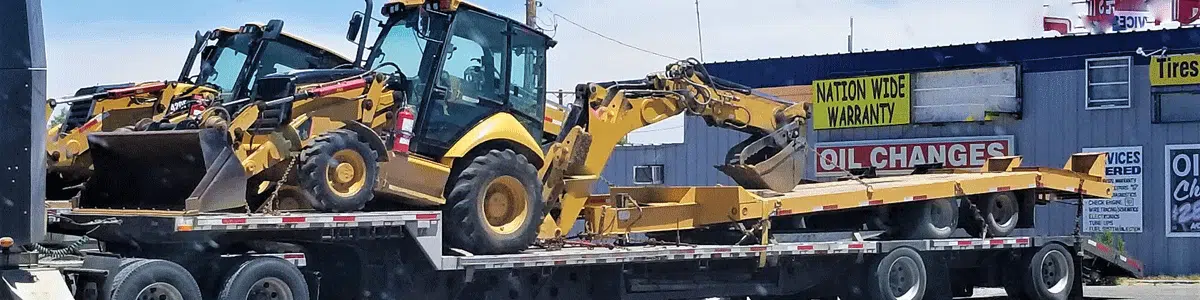
Heavy haul trailer selection is one of the most important decisions in oversized equipment transport. The trailer does more than carry the load. It controls loading height, deck space, axle distribution, turning behavior, route clearance, permit requirements, and overall transport cost. Different loads need different trailer designs. A tall excavator may need a low deck. …
Continue reading "Heavy Haul Trailer Types and When Each One Is Used"
Read More
Touseef Shaikh
25 May , 2026
A lowboy trailer is used when heavy equipment needs to travel lower to the ground than it would on a standard flatbed or step deck. That lower deck height helps control total transport height, improve stability, and make oversized machinery easier to move through routes with bridges, overpasses, signs, and utility-clearance concerns. In heavy haul …
Continue reading "When to Use a Lowboy Trailer for Heavy Equipment Transport"
Read More
Touseef Shaikh
25 May , 2026
An RGN trailer is used when oversized machinery needs a safer, lower, and more controlled way to load onto the trailer. RGN means removable gooseneck. The front section of the trailer can detach, allowing equipment to drive onto the deck from the front instead of climbing steep rear ramps. That design makes RGN trailers especially …
Continue reading "When to Use an RGN Trailer for Oversized Machinery"
Read More
Touseef Shaikh
25 May , 2026
Step deck trailers are used when a load needs more height clearance than a flatbed can offer, but does not require the deeper drop of a lowboy or double-drop trailer. They are useful for equipment, machinery, and industrial cargo that sits moderately tall, loads more easily on an open deck, and still needs a lower …
Continue reading "When Step Deck Trailers Are Used in Heavy Haul Transport"
Read More
Touseef Shaikh
25 May , 2026
Extendable trailers help move long oversized loads by giving the cargo more support across its length. Some freight cannot be shortened, folded, or divided into smaller pieces. Long beams, bridge sections, crane booms, wind components, pipe sections, structural steel, and industrial assemblies often need a trailer that can stretch to match the load instead of …
Continue reading "How Extendable Trailers Help Move Long Oversized Loads"
Read More
Touseef Shaikh
25 May , 2026
Some heavy haul loads are not difficult because they are tall or long. They are difficult because their weight is too concentrated for a simpler trailer setup. A transformer, mining component, large industrial machine, pressure vessel, or heavy plant assembly may place so much force into the trailer and road system that ordinary axle arrangements …
Continue reading "Why Multi-Axle Trailers Are Used for Extreme Heavy Haul Loads"
Read More
Touseef Shaikh
25 May , 2026
Double-drop trailers reduce transport height by placing the cargo in a lower center well between the front and rear deck sections. That lower well allows taller equipment, machinery, tanks, and industrial components to ride closer to the road than they would on a flatbed or standard step deck. When height is the main challenge, a …
Continue reading "How Double-Drop Trailers Reduce Transport Height"
Read More
Touseef Shaikh
25 May , 2026
Flatbed trailers are enough for heavy equipment hauling when the load is manageable in height, weight, width, securement, and loading method. Not every machine needs a lowboy, RGN, double-drop, extendable, or multi-axle trailer. Sometimes the safest and most efficient choice is the simpler one, as long as the equipment truly fits the trailer and the …
Continue reading "When Flatbed Trailers Are Enough for Heavy Equipment Hauling"
Read More
Touseef Shaikh
25 May , 2026
Modular trailers support oversized industrial cargo by giving carriers a trailer system that can be configured around the load instead of forcing the load to fit a standard deck. Some cargo is too heavy, too dense, too unusual in shape, or too sensitive for a normal trailer setup. A transformer, pressure vessel, plant component, mining …
Continue reading "How Modular Trailers Support Oversized Industrial Cargo"
Read More
Touseef Shaikh
25 May , 2026
Trailer choice affects more than how a load sits during transport. It can change permit requirements, route options, escort needs, clearance risk, bridge review, loading method, delivery timing, and total project cost. In heavy haul work, the trailer is not just the equipment under the cargo. It is part of the legal, physical, and financial …
Continue reading "How Trailer Choice Affects Permits, Route Planning and Cost"
Read More